
Independent educational resource
Drug testing information you can understand and use
Learn how urine, oral-fluid, hair, and blood drug tests work; what can affect detection; how screening and confirmation differ; and what your result may mean.
Start with what you need to know
Choose the guide that best matches your situation. Each section explains the process, limitations, and reasonable next steps in plain language.
Preparing for a legitimate test
Know what documents to bring, what to disclose appropriately, and what normally happens during collection.
Understanding a result
Learn the difference between negative, presumptive positive, confirmed positive, dilute, invalid, and cancelled results.
Comparing test methods
See how urine, oral fluid, hair, and blood testing differ in collection, typical use, and limitations.
Estimating detection windows
Understand why detection estimates vary and which factors matter more than a single number found online.
Workplace drug testing
Explore pre-employment, random, post-incident, and regulated testing, including privacy and employee-rights topics.
Unexpected or disputed results
Learn how confirmation, medical review, documentation, retesting, and split specimens may apply.
Common drug-testing methods
The best specimen depends on the purpose of testing. No method can answer every question, and a positive screening result should not automatically be treated as a final confirmed result.
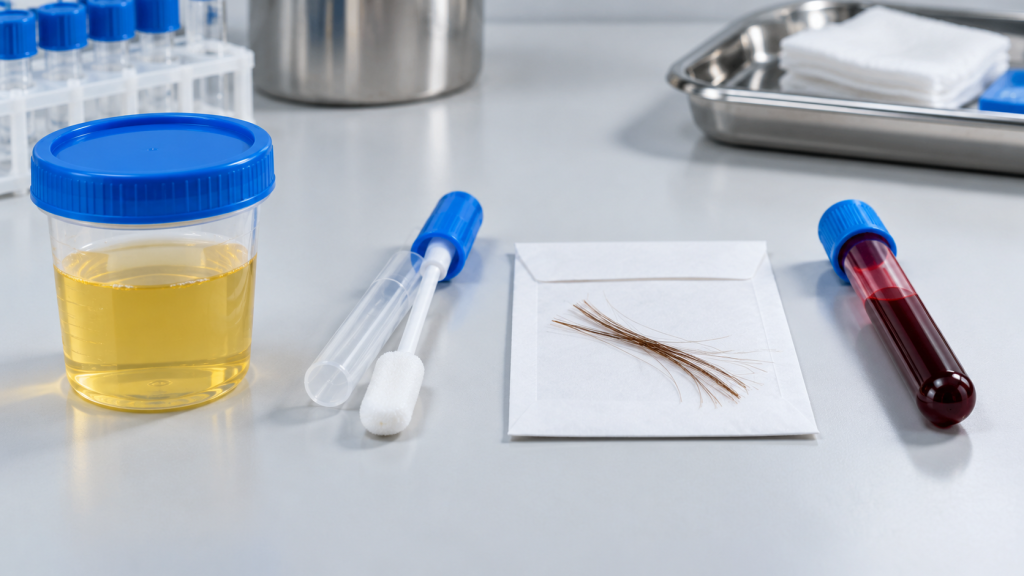
| Method | Common uses | Important limitations | Guide |
|---|---|---|---|
| Urine | Workplace, clinical, court, and at-home testing | Usually detects metabolites rather than current impairment; collection timing and specimen validity matter. | Urine testing |
| Oral fluid | Recent-use and observed-collection programs | Detection is generally more recent than hair testing; collection conditions and device cutoffs affect results. | Oral-fluid testing |
| Hair | Looking for a longer retrospective pattern of exposure | Not designed for very recent use or current impairment; cosmetic treatment, sample length, and laboratory method matter. | Hair testing |
| Blood | Clinical care, forensic investigations, and selected post-incident situations | More invasive, typically focused on a shorter time frame, and requires professional collection and interpretation. | Blood testing |
How a laboratory drug test generally works
Procedures vary by program, but reliable testing usually separates collection, screening, confirmation, and result review.
Collection
The specimen is collected, identified, sealed, and documented. Regulated programs may require a formal chain of custody.
Initial screening
A screening test checks for a drug or metabolite at a defined cutoff. A reactive screen is preliminary, not necessarily final.
Confirmation
A laboratory may use a more specific analytical method to identify and measure the substance associated with a non-negative screen.
Review and reporting
Depending on the program, a qualified medical reviewer may consider prescriptions or another legitimate medical explanation before reporting.
Learn more about screening and confirmation or see what happens during specimen collection.
A result is more than “positive” or “negative”

Result guides
Workplace, regulated, and legal testing
Testing requirements can differ by employer, industry, location, collective-bargaining agreement, and whether a federal program applies. State cannabis protections and testing restrictions are not uniform.
Pre-employment testing
Understand the usual process, timing, documentation, and questions applicants commonly have.
Employee privacy and rights
Learn why notice, consent, confidentiality, policy language, and jurisdiction may affect the process.
Laws and regulations
Start with federal rules, then check the law and policy that apply to the specific location and testing program.
Drug-testing questions
How long can a drug be detected?
There is no single answer. The specimen type, substance, cutoff, dose, frequency of exposure, time since exposure, metabolism, and laboratory method all matter. Use detection-window tables as estimates rather than guarantees. See the detection-window reference.
Can prescription or over-the-counter medicines affect a result?
Some screening tests can react with medications or other substances. Confirmation testing and, when applicable, review by a qualified medical professional help distinguish a preliminary screen from a verified result. Keep an accurate medication list and follow the testing program’s instructions for disclosure.
Does a negative result prove there was no drug use?
No. A negative result means the test did not detect a covered substance at or above the applicable cutoff in that specimen. Timing, the drug panel, specimen type, and test sensitivity all affect what a negative result can show.
What should I do if I believe a result is wrong?
Act promptly. Request the written result and applicable policy, document prescriptions and relevant medical information, and ask whether confirmation, Medical Review Officer review, a split specimen, or a formal dispute process is available. Deadlines can be short in regulated programs.
Are workplace drug-testing laws the same everywhere?
No. Requirements differ across federal programs, states, localities, and industries. Employer policies also vary. Review the rule that applies to the specific test and consult a qualified attorney for advice about an individual legal matter.
Source-first information and clear limitations
Drug-testing information can affect employment, healthcare, athletics, and legal proceedings. Our goal is to explain what a test can show, what it cannot show, and where readers can verify the underlying rule or scientific guidance.